Valorant, how to build smurf-level impact without a second account
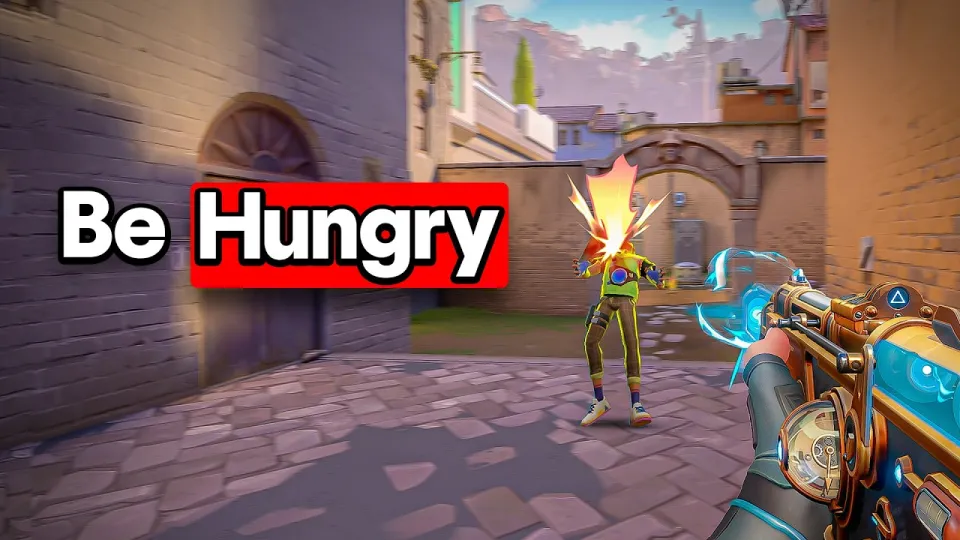
Video: How to Get So Good at Valorant it Feels Like Smurfing
You can order the same kind of articles for your own video to boost it on YouTube and Google. Just message the Telegram bot @sat_sit_bot. It writes articles around your video, embeds the video and publishes them on popular niche websites (no ads). Free trial — 50 articles.
· based on the channel Konpeki
Valorant players who look like smurfs are not doing anything hidden — they react to the enemy instead of running a pre-written plan, and they keep their crosshair ready before the fight starts. That single habit, repeated across every round, is what makes a Diamond player look like a Radiant in a Gold lobby. If you want the same effect, the fastest route is a small set of mechanical and mental habits you can drill today, plus a review loop that fixes the mistakes ranked players repeat for hundreds of games. Konpeki's breakdown of smurf-level play covers exactly that, and the Immortal Roadmap Program linked at roadmap.gg/v/lUfrMRb74SE is the structured version of the same idea.
Why "react, don't predict" is the whole Valorant smurf secret
The smurf look comes from reacting to what the enemy actually does, not from executing a script you decided on during the buy phase. A player who peeks a corner already knowing they will swing wide gets punished by anyone holding an off-angle; a player who peeks, reads the enemy's position, and then chooses between a wide swing, a jiggle, or a retreat wins the same duel most of the time. In Valorant terms, this means your first action in a fight should be information-gathering, and your second action should be the one that kills.
Practical version of the habit:
- Approach every angle with a crosshair placed at head level on the most likely spot, not the widest spot.
- Peek just enough to see whether the enemy is holding, moving, or absent.
- Commit only after that read — swing wide if they are static, stop and re-peek if they are already tracking you.
- Reset your position after every duel, because a predictable re-peek is the easiest kill in the game.
This is why low-rank players feel like they are "losing to smurfs" when the enemy is simply unpredictable: they cannot pre-aim a player who has not committed to a pattern yet.
Crosshair placement and movement drills that transfer to ranked
Crosshair placement is the cheapest skill to improve and the one that changes your rank fastest, because it removes the need to flick. The standard is simple: your crosshair should already be where an enemy's head will appear, and your movement should never drag it away from that line. Most players lose this in two situations — while rotating through open ground and while clearing a site with multiple angles.
The drills that actually transfer:
- Range strafe shooting: move side to side with A and D, firing one shot each time your direction changes. You do not need to fully stop; you need to fire at the moment your counter-strafe cancels your momentum, which is when your first bullet is accurate.
- Movement error training: turn movement error on in the Range and set the multiplier to 0.5. This makes sloppy counter-strafing visible instead of hiding it behind forgiving spread.
- Angle-by-angle clearing: pick one site and walk through it with a crosshair placed on each angle in the order you would clear it in a real round. Repeat until the order is automatic.
- Strafe-shoot-strafe: never stand still after a shot. One bullet, one strafe, one re-peek.
A viewer asked whether the strafe drill means releasing movement keys or firing mid-strafe. The answer is the second: keep A and D alternating and fire as the direction switches, because that is exactly the timing that shows up in real duels.
Utility usage that makes you feel unkillable
Utility is where smurf-level players separate from players with good aim, because utility decides fights before a bullet is fired. The rule is to use utility to remove the enemy's options, not to deal damage. A smoke that blocks a common operator angle is worth more than a molly that chips 40 HP, and a flash that forces an enemy to turn is worth more than a flash that lands blind but late.
Things to fix in your own utility habits:
- Stop throwing utility at the start of the round by default. Hold it until you know where the enemy is playing.
- Use one piece of utility per duel, not three. Over-committing utility leaves you with nothing for the retake.
- On defense, save a piece for the retake instead of burning it on the initial hold.
- On attack, use utility to cut off the rotate, not just to enter the site.
This is also the part of the game where a coach helps most, because utility mistakes are invisible in a scoreboard but obvious in a round review.
Mental habits that keep your rank climbing
Tilt costs more RR than bad aim, and it usually shows up as forcing duels you already know are bad. The fix is to treat each round as a standalone problem: what did the enemy do last round, and what is the cheapest counter to it. Players who climb consistently are the ones who can lose three rounds in a row and still hold the same crosshair discipline on the fourth.
A short mental checklist before each round:
- What did the enemy do last round that worked?
- What is the one adjustment that beats it?
- What is my job this round if my team's plan fails?
- What am I not going to do again this round?
Keeping a plan is the point. As one viewer put it, Valorant is closer to a sport than a puzzle — you prepare, you execute, and you adjust when it does not work, the same way you would in a match of any physical sport.
How to review your own games like a coach
Reviewing your own VODs is the highest-value habit in Valorant and the one most players skip, because it is boring and it exposes mistakes. The efficient version takes fifteen minutes, not two hours. Watch only your deaths, and for each one answer a single question: was the crosshair already on the angle, or did I have to flick? If you had to flick, the death was a placement error, not an aim error.
A workable review routine:
- Watch every death at half speed and pause the frame before the enemy appears.
- Mark whether your crosshair was on the angle, near it, or nowhere close.
- Count how many deaths came from re-peeking the same angle twice.
- Count how many deaths came from using no utility at all.
- Pick one category and fix only that for the next ten games.
Players who do this climb faster than players who grind aim trainers for hours, because the mistakes it catches are the ones that repeat every single game. If you want the same process applied to your account with a structured plan, the Immortal Roadmap Program is built around exactly this kind of review.
Common questions players ask about smurf-level play
Most doubts about playing like a smurf come down to whether the habits are learnable at a lower rank, and the answer is yes — they just take repetition. Rank is not the barrier; consistency is. A Gold player who counter-strafes correctly and holds a proper crosshair will outperform a Diamond player who does neither, and that gap shows up within a few dozen games.
The other common doubt is whether you need a second account to practice. You do not. Unrated and Swiftplay exist for exactly this, and ranked is where the habits have to survive pressure. Practicing the same drills in the Range and then abandoning them in ranked is the single most common reason players plateau.
Useful links
- Immortal Roadmap Program (5 divisions in 10 weeks, guaranteed): https://roadmap.gg/v/lUfrMRb74SE
- Free coaching resources and office hours on Discord: https://www.discord.gg/UnRETVmRpV
- Twitch: https://www.twitch.tv/konpekichan
- Twitter: https://twitter.com/coachpeki
- TikTok: https://www.tiktok.com/@coachpeki
Final thoughts on playing like a smurf in Valorant
Smurf-level play in Valorant is not a secret technique — it is reaction over prediction, a crosshair that is already on the angle, utility that removes options, and a review loop that catches the same mistake twice. Konpeki's breakdown frames it the same way: get better, and the smurf look follows on its own. Pick one habit from this article, drill it for ten games, and only then add the next one. If you want the fast, structured version of that process, book a free call through roadmap.gg/v/lUfrMRb74SE and see whether the Immortal Roadmap Program fits your account.
Key takeaways
- Smurfing in Valorant looks fast, but it is really a set of habits: react to the enemy instead of pre-planning every duel.
- The core loop in Konpeki's breakdown: hold a tight crosshair, move unpredictably, and let the enemy commit first.
- Range drills work best when you fire on direction changes (A-D-A) rather than stopping dead between strafes.
- Movement error multiplier can be lowered to 0.5 in the Range to train clean counter-strafing.
- Rank gains come from repeatable review of your own deaths, not from copying Radiant aim routines.
Source: How to Get So Good at Valorant it Feels Like Smurfing · Markdown version
Questions & answers
Do I need a smurf account to practice these habits?
No. Every habit in this guide — counter-strafing, crosshair placement, utility discipline — can be drilled in the Range, Unrated, or Swiftplay. Ranked is where the habits have to survive pressure, so practicing there is eventually mandatory, but a second account is not the requirement.
In the strafe drill, should I stop moving before shooting or fire while switching direction?
Fire as your direction switches. Keep A and D alternating without fully releasing, and take the shot at the moment your counter-strafe cancels your momentum — that is when your first bullet is accurate and it matches real duel timing.
Is this coaching useful for console players on PS5 or Xbox?
The mechanical side differs because of aim assist and controller input, but the decision-making layer — reacting instead of predicting, utility usage, round review — transfers directly. Console players should focus on crosshair (reticle) placement and movement discipline first, then utility timing.
How long does it take to see rank gains from these changes?
Most players see measurable improvement within a few dozen games if they fix one habit at a time instead of all of them at once. Structured programs like the Immortal Roadmap Program advertise five divisions in ten weeks, which reflects consistent daily work rather than a single tip.